

Fit for the First Vertical Meters
Kathi Millinger is a fitness trainer in Zell am See. She loves spending time on her local mountain, the Schmittenhöhe, and many of its special spots recharge her energy while hiking. “Hiking gives me a sense of freedom, but to fully enjoy it, a bit of preparation is necessary. So, off the couch and get moving! My tip: training is more fun with your favorite hiking gear, and if you picture your most beautiful summit victory before you even start, it’s much easier to overcome your inner resistance. Leaving the car at home now and then and walking wherever possible already does wonders for your endurance. And if you wear your new hiking boots while doing this, you won’t be caught off guard by painful blisters during your holiday.”
Kathi’s top exercises to kick off the hiking season – Try them yourself!
Water Bottle Balance Stand
For coordination and balanc – helps you stay steady on root-filled trails and rocky paths. Important: Do not twist your hips, keep your back straight, slightly bend the standing leg, engage your glutes, and avoid overextending your neck. Hold the position for 20 seconds, then switch legs.
Backpack Squats
For strong glutes, thighs, and calves – helps prevent muscle soreness on downhill hikes. Important: Sit back with a straight back—avoid rounding your spine. Bend your knees in line with your feet. Then slowly rise and stretch up onto your toes. Repeat 10 times.
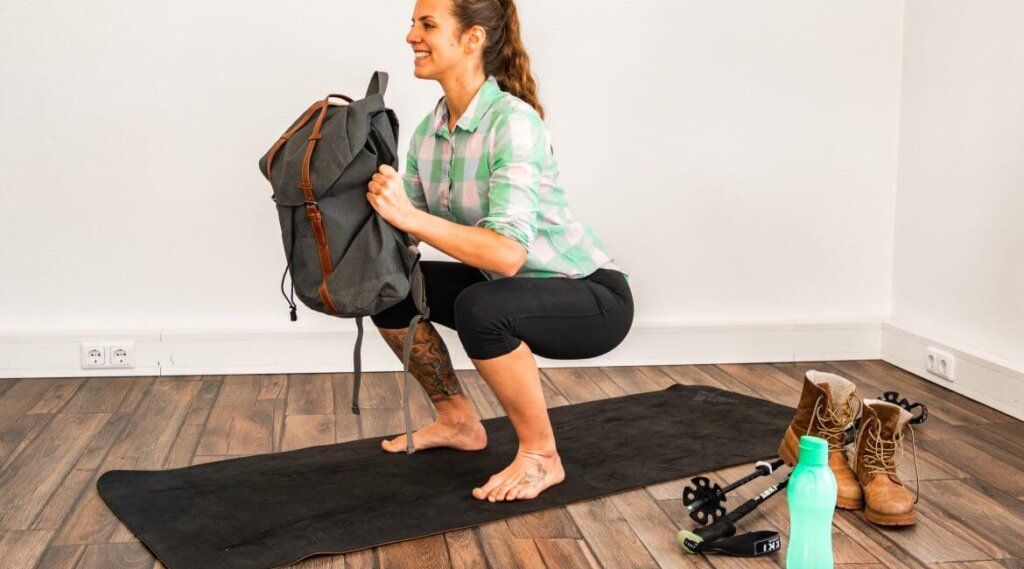
Hiking fitness exercise (c) Maria Pirchner Fotografie mp-fotografie.at
Hiking Pole Curl
This exercise improves mobility and strength for your spine. Instructions: Tuck your chin to your chest and let your shoulders and arms hang relaxed. Roll down your spine, vertebra by vertebra, as far as you can with straight legs. Then roll back up, one vertebra at a time, and lift your chin in the final position. Repeat 10 times.
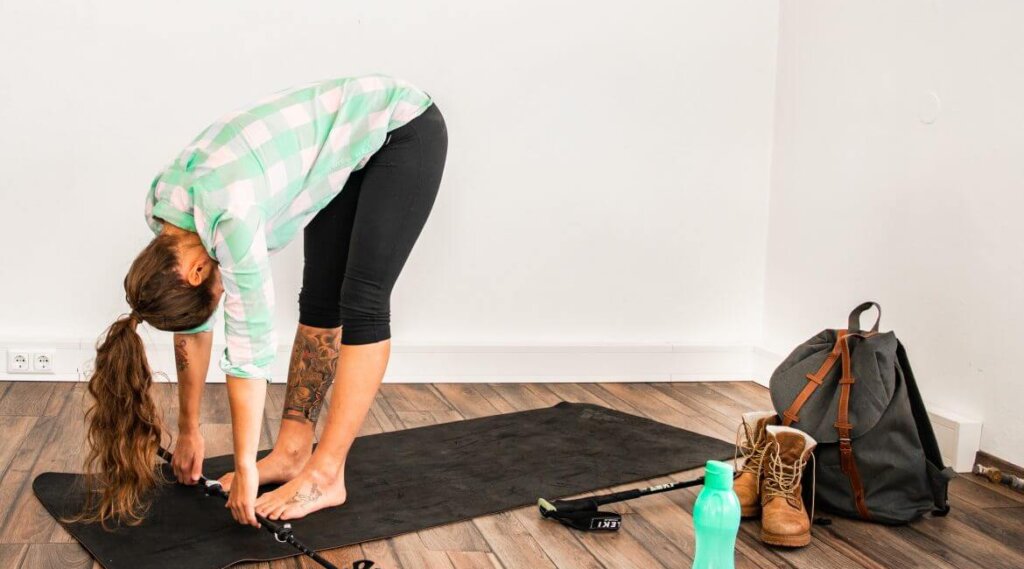
Hiking fitness exercise (c) Maria Pirchner Fotografie mp-fotografie.at
Backpack Check
After finishing these exercises and settling back on the couch, you can tackle a small but important task: checking the basics for your backpack. For every hike, make sure to pack a charged mobile phone, a change of clothes, snacks, and enough water – plus a first aid kit. A hat, headband, gloves, and rain gear are also recommended, as even in summer, the weather in the high mountains can bring surprisingly chilly temperatures.
For longer hikes, carrying a power bank for your phone is worthwhile. This ensures enough battery for countless photos and videos of breathtaking views and unforgettable moments, while also guaranteeing that you can call for help in an alpine emergency. It’s also smart to download apps that provide maps or hiking tips, or the app of the Austrian Alpine Club, which allows you to send an emergency call with your precise location.
Time to Plan Your Hike
Now the hiking season is finally here, your fitness is at the desired level, your basic gear is checked, and it’s time to plan your hike. Always choose a destination suitable for the least experienced participant—start with easy, relaxed trails.
Expecting an afternoon summer thunderstorm? Then pick a hike that allows for an early start. Keep an eye on the sky, as storms can build quickly in the mountains. If a storm approaches while you’re still on the trail, make sure in advance to know where nearby huts are, so you can take shelter.
In summer heat, your body loses a lot of fluid – carry plenty of water, along with sunscreen and a hat.
Hiking with Your Dog
If your four-legged friend is coming along, pack extra water and maybe a few motivating treats. Don’t forget dog waste bags – always pick up after your dog in the mountains. On hot summer days, favor shaded forest paths with mountain streams over trails above the tree line.
In grazing areas, keep your dog on a leash. When crossing pastures, maintain a safe distance from cows and keep them in sight. If a cow tries to defend its calves and becomes aggressive, let your dog off the leash and send it away – the dog is fast enough to get out of danger. For more detailed guidance on dealing with livestock, click here.
Your first aid kit should also include a few items for your dog, such as tweezers, a tick remover, and disinfectant spray. For those wanting to be fully prepared for emergencies with their dog, special first aid hiking courses for dogs are offered, for example, in the Wildkogel Arena.