
The people of Salzburg love their farmers’ products — milk, butter, cheese. They shop locally because they believe in it. It’s always been this way and it’s probably going to stay that way too, as more and more farmers are switching to organic farming. This was already the case in SalzburgerLand in the middle of the 1990s, when Austria joined the European Union — organic produce was recognised as a niche in which the country could successfully establish itself. And the numbers speak for themselves: more than half of the agricultural land in SalzburgerLand is farmed organically or organic-dynamically as per Demeter guidelines. Unprecedented in Europe! Over time, a trend morphed into a conscious dietary practice. Today, organic is considered premium quality that is also available in supermarkets. And thus, it was only a small step for restaurants and hotels to switch to organic food products as well.
The organic origin: farms and mountain pastures
The mountain pastures and organic farms with their farm shops are among the most important locations on the culinary pathway for organic connoisseurs. Large-scale organic production can only work when there are enough regional producers — in this case, the farmers and agriculturalists. At the organic dairy Fürstenhof in Kuchl, excellent award-winning cheeses have been made from organic raw milk for almost 20 years — today, there are more than 30 different types available. At Fürstenhof, you can also get to know the trade of the cheesemaker or take a break at the Bauernhof-Café.
So much organic delight
Six different types of organic cheese are produced at Sinnlehenhof in Leogang. Those who want to stay longer can move into the barrier-free holiday home or the holiday apartment. Staying overnight is also possible at Biohof Sauschneider in St. Margarethen in the Lungau region. The farm shop sells homemade pastries, spelt noodles and bread made from local rye. The farmers are active members of the Slow Food movement. The Joglbauer in Obertrum am See is one of the earliest organic farms and the farm shop has a wide array of organic products as well as vegetables, bread, pastries, juice, brandies, jam and vinegar specialities. Family Hörl’s Jagglalm in Saalfelden was once the first organic certified mountain pasture hut in SalzburgerLand. This is where Pinzgau mountain pasture treats are served in organic quality — such as the original Pinzgauer Bladl as per grandma’s original recipe, Kaspress dumplings and, of course, the classic Brettljause.
From the hotel to the burger bistro
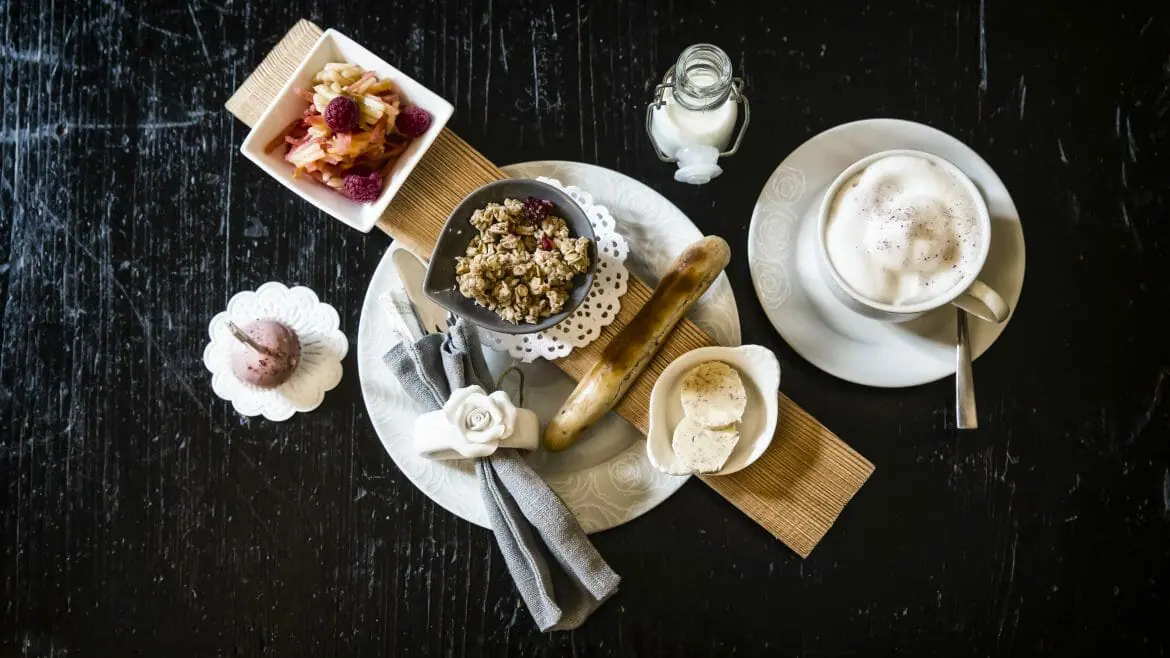
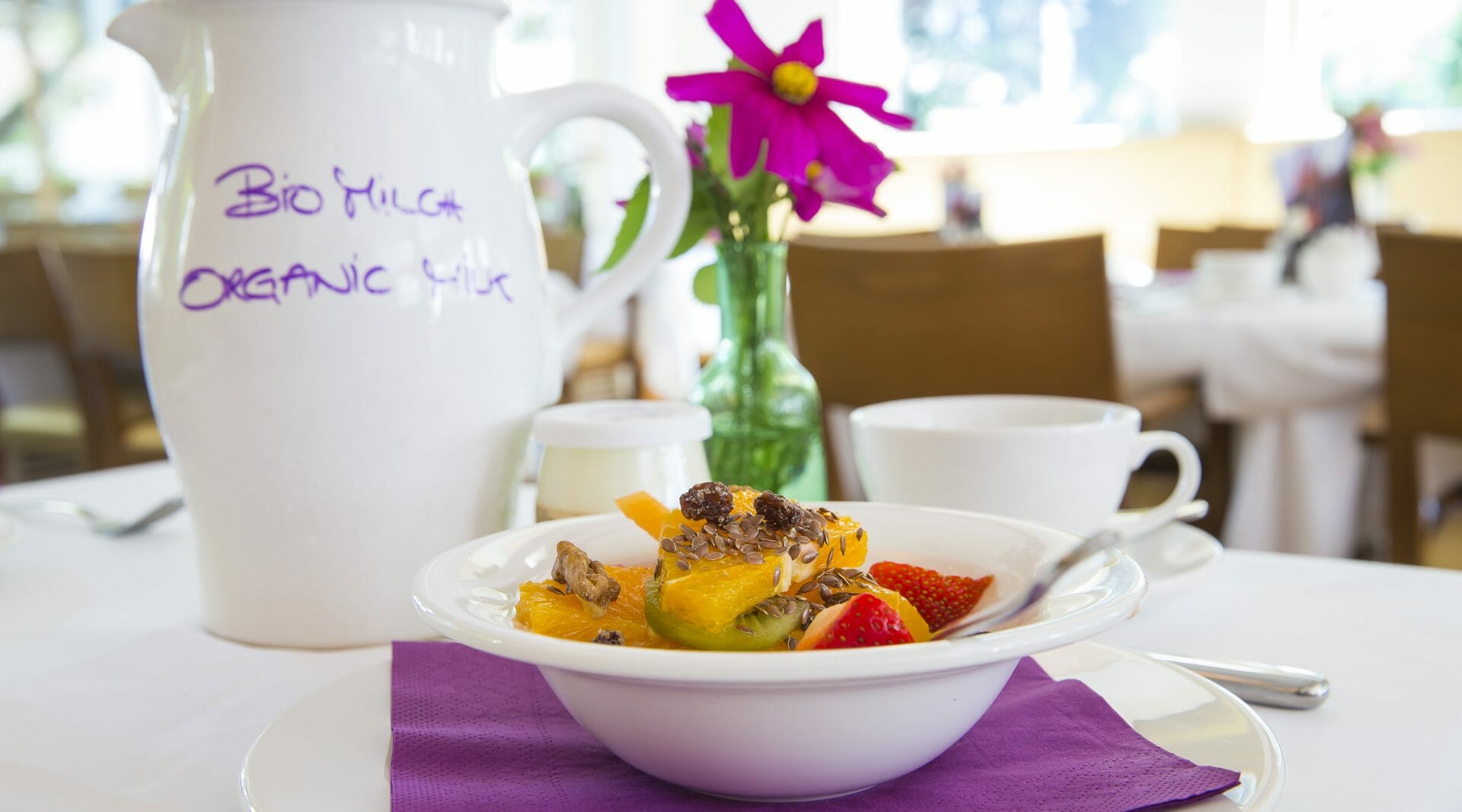
The organic destinations in the city of Salzburg show that even a 100% organic city trip is possible. Enjoy a classy overnight stay at Hotel & Villa Auersperg, where the owners live the principle of sustainability to the fullest. The Salzburg organic buffet breakfast is a highlight and includes many regional and organic delicacies which you can also enjoy as a non-guest à la carte. The organic delicatessen shop Rochushof is a real organic meeting spot in the city: all participating businesses such as the Mattigtaler farm dairy, the Itzlinger bakery or the organic farm Feldinger emphasise top quality.
… More than half of all the agricultural land in SalzburgerLand is farmed organically or biodynamically (Demeter). Organic stands for primeval tradition and original naturalness. Organic agriculture seeks respect and honesty in the relationship between minerals, plants, animals and people as well as sustainability and health on all levels to guarantee the future of our planet. “Less is often more!” – organic ahead…!
Larger, more diverse and more extensive than ever, the 9th Edition of the Via Culinaria Guide presents ten Taste Trails and about 390 “tasty addresses” in SalzburgerLand.” Click here to order a copy of the Via Culinaria Guide.